

Ah, Jujutsu Kaisen, the anime that has us all hooked on cursed spirits and stylish sorcerers. Among the dazzling array of techniques showcased, one stands out not just for its effectiveness, but also for its sheer, unadulterated… peculiarity. We speak, of course, of the illustrious Boogie Woogie technique, wielded by the one and only Aoi Todo. Now, you might be thinking, “Boogie Woogie? Sounds more like a dance craze than a devastating jujutsu sorcery!” And to that, we say, you’re not entirely wrong. But oh, dear reader, you are in for a treat as we delve into the wonderfully weird and surprisingly potent world of Boogie Woogie.

Forget your earth-shattering punches and reality-bending domains for a moment. Boogie Woogie operates on a different plane, a plane where rhythmic clapping and strategic spatial manipulation reign supreme. It’s a technique so unconventional, so delightfully bizarre, that it’s practically guaranteed to leave both opponents and viewers scratching their heads in bewildered amusement. But make no mistake, beneath the surface of this seemingly comical ability lies a tactical depth that makes Aoi Todo a force to be reckoned with. So, buckle up, dear sorcery enthusiasts, as we embark on a comprehensive, and perhaps slightly irreverent, exploration of Jujutsu Kaisen’s most rhythmically inclined technique.
Aoi Todo: The Enthusiastic Purveyor of Peculiarity
To truly appreciate Boogie Woogie, one must first understand its flamboyant user, Aoi Todo. Imagine, if you will, a jujutsu sorcerer sculpted from granite, possessing the charisma of a particularly enthusiastic brick, and wielding a cursed technique that sounds like it belongs in a 1940s jazz club. That, in essence, is Aoi Todo. He’s not your typical brooding anime protagonist; instead, he bursts onto the scene with the subtlety of a foghorn in a library, all boisterous energy and unwavering confidence. His physique is imposing, his opinions are strong (especially when it comes to the “ideal woman”), and his fighting style is as direct and impactful as a runaway train.
Todo’s jujutsu philosophy is as straightforward as his personality: maximum power, maximum efficiency, and perhaps just a dash of bewildering his opponents into submission. He favors direct combat, overwhelming strength, and techniques that allow him to control the battlefield. This is where Boogie Woogie slots in, not as a primary offensive tool in the vein of, say, Yuji Itadori’s Divergent Fist, but as a tactical linchpin, a way to orchestrate chaos and control the flow of battle with a clap of his hands. It’s a technique that perfectly complements his aggressive style, allowing him to set up devastating attacks and keep his adversaries constantly off-balance, both literally and figuratively.
Furthermore, Todo’s personality, while seemingly bombastic and simple, actually showcases a sharp tactical mind. He’s not just a brute; he’s a calculating fighter who uses his strength and Boogie Woogie in concert to achieve victory. His seemingly eccentric nature often lulls opponents into underestimating him, a fatal error when facing a sorcerer who can swap positions with a clap and deliver a devastating blow the next moment. In essence, Aoi Todo and Boogie Woogie are a match made in jujutsu heaven, a pairing of power and peculiarity that is as effective as it is entertaining.
Deconstructing the Dance: The Mechanics of Boogie Woogie
Now, let’s get down to the nitty-gritty, the inner workings of this clapping conundrum. Boogie Woogie, at its core, is a technique of spatial manipulation, but with a twist – it’s activated by a clap. Yes, you heard that right, a clap. Not an incantation, not a hand seal, but a good old-fashioned hand-to-hand smack. It’s almost as if Todo decided that jujutsu sorcery needed a bit more percussion and a lot more unpredictability. When Todo claps his hands, he can swap the positions of two targets imbued with cursed energy. This could be himself and an ally, himself and an enemy, or even two allies. The possibilities, while not infinite, are certainly numerous and ripe for tactical exploitation.
The crucial element here is “cursed energy.” Boogie Woogie isn’t just teleportation; it’s a cursed technique that manipulates the spatial positioning of entities saturated with cursed energy. This means it primarily works on jujutsu sorcerers, cursed spirits, and anything else steeped in this mystical energy. A mundane rock, for example, is likely to remain stubbornly in place, much to Todo’s potential chagrin if he ever tried to swap himself with one. The technique is also seemingly instantaneous. There’s no visible warping of space, no swirling vortexes, just a clap and a sudden shift in location. It’s this abruptness that makes it so disorienting and difficult to counter.
Furthermore, the swapping isn’t random. Todo has precise control over who swaps with whom. This isn’t some chaotic ability that throws everyone into a spatial blender. It requires intent and focus, channeled through the simple act of clapping. The clap, therefore, isn’t just a quirky activation method; it’s the focal point of Todo’s cursed energy manipulation, the conductor’s baton in his symphony of spatial rearrangements. It’s a testament to the idea that even the most seemingly absurd actions can become potent tools in the hands of a skilled jujutsu sorcerer. One might even argue that the sheer unexpectedness of the clapping is part of its effectiveness, throwing opponents off guard before the spatial swap even occurs.
Tactical Tango: The Strengths of Boogie Woogie in Combat
Now, let’s talk about why Boogie Woogie is more than just a bizarre party trick. In the heat of battle, this technique transforms into a tactical powerhouse, capable of turning the tide with a well-timed clap. Its primary strength lies in its disruptive capabilities. Imagine facing a coordinated assault of cursed spirits, only to have your carefully planned formation instantly scrambled by a couple of hand claps. This is the essence of Boogie Woogie’s tactical brilliance. It excels at disrupting enemy formations, breaking up coordinated attacks, and sowing chaos in the ranks of opponents.
Consider a scenario where allies are cornered or separated. With Boogie Woogie, Todo can instantly reposition them, pulling them out of danger or bringing them together to maximize their combined strength. It’s like a strategic reshuffling of combatants, allowing for rapid adjustments to ever-changing battlefield dynamics. Moreover, it’s not just about defense. Boogie Woogie is equally adept at offense. By swapping positions with an ally, Todo can create unexpected openings for attacks. An opponent focusing on Todo might suddenly find themselves face-to-face with a completely different sorcerer, leaving them vulnerable to a surprise assault.
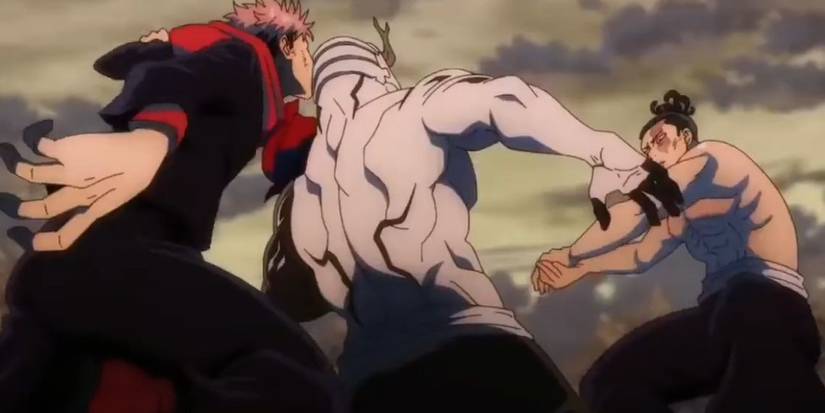
The psychological impact of Boogie Woogie should not be underestimated either. Facing an opponent who can teleport you or your allies around with a simple clap is inherently unsettling. It breeds uncertainty and paranoia. Where will you be next? Who will be standing beside you? This constant state of spatial flux can erode an opponent’s focus and confidence, making them more susceptible to mistakes. In essence, Boogie Woogie is not just a technique; it’s a psychological weapon, a tool of battlefield control that operates on both physical and mental levels. It’s a technique that forces opponents to constantly second-guess their positioning and strategies, adding another layer of complexity to combat encounters.
Rhythmic Restraints: Weaknesses and Limitations of the Clap-Based Combat
Despite its tactical prowess, Boogie Woogie is not without its limitations. Like any jujutsu technique, it has vulnerabilities that can be exploited. The most obvious weakness is its reliance on clapping. Disrupting Todo’s ability to clap effectively neuters his Boogie Woogie. This could be achieved through various means, from sound-dampening techniques to simply preventing him from bringing his hands together. Imagine a scenario where an opponent uses a cursed technique to create a localized silence field around Todo. Suddenly, his clapping becomes muffled, his Boogie Woogie falters, and his tactical advantage diminishes significantly. It’s a somewhat comical image, but in the brutal world of jujutsu sorcery, even comical weaknesses can be fatal.
Another potential limitation lies in the precision of the swaps. While Todo demonstrates remarkable control, there’s always the possibility of miscommunication or unintended swaps, especially in the chaos of large-scale battles. Imagine Todo intending to swap himself with an ally to create an opening, but due to a momentary lapse in concentration, he accidentally swaps two allies instead, potentially disrupting their own strategy. While unlikely given Todo’s skill, the potential for such errors exists, adding a layer of risk to the technique. Furthermore, the technique likely consumes cursed energy with each clap and swap. While Todo’s cursed energy reserves are considerable, repeated use of Boogie Woogie in prolonged engagements could lead to fatigue and reduced effectiveness. It’s not a technique to be spammed carelessly; it requires strategic deployment and energy management.
Finally, the effectiveness of Boogie Woogie is inherently tied to the presence of cursed energy. Against opponents who lack cursed energy or possess techniques that negate or disrupt cursed energy flow, Boogie Woogie might become significantly less potent, or even entirely useless. While such scenarios might be less common in the world of Jujutsu Kaisen, they represent a theoretical vulnerability that skilled opponents could potentially exploit. In essence, while Boogie Woogie is a powerful and versatile technique, it’s not an invincible one. It has weaknesses that can be targeted, limitations that must be considered, and contexts where its effectiveness might be diminished. This balance of strengths and weaknesses is, of course, a hallmark of well-designed jujutsu techniques, adding depth and strategic complexity to battles.
Boogie Woogie in Action: Notable Engagements in Jujutsu Kaisen
The true measure of any jujutsu technique lies in its application in actual combat, and Boogie Woogie has certainly had its moments to shine in Jujutsu Kaisen. One of the most memorable showcases of its effectiveness is during the Kyoto Goodwill Event arc. In the chaotic team battles, Todo masterfully utilizes Boogie Woogie to orchestrate his team’s movements, disrupting the Kyoto students’ strategies and creating openings for his allies. It’s in this arc that we truly see Boogie Woogie as a force multiplier, enhancing the overall combat capability of the Tokyo team through strategic spatial manipulation. Remember that moment when he swapped positions to allow Yuji to land a devastating blow? Pure Boogie Woogie brilliance.
Another notable instance is during the Shibuya Incident arc, a chaotic and brutal conflict where Boogie Woogie proves its worth in large-scale engagements against powerful cursed spirits. In the face of overwhelming numbers and formidable foes, Todo’s Boogie Woogie becomes a crucial tool for crowd control, ally repositioning, and creating momentary advantages amidst the mayhem. It’s not always about flashy, decisive blows; sometimes, the most impactful techniques are those that allow for tactical flexibility and battlefield management, and Boogie Woogie excels in this regard. Think of it as the jujutsu equivalent of a strategic retreat and repositioning maneuver, all executed with a clap and a grin.
Furthermore, Boogie Woogie’s effectiveness isn’t limited to large-scale battles. In one-on-one encounters, it can be equally devastating. Imagine facing Todo in a duel. You anticipate his attacks, you brace for his strikes, but then, with a clap, you’re suddenly not where you thought you were, and neither is he. This disorientation and unpredictability can be a significant advantage, throwing off even skilled opponents and creating opportunities for decisive attacks. Boogie Woogie, therefore, is a versatile technique, adaptable to various combat scenarios, from team battles to individual duels, showcasing its tactical depth and broad applicability within the Jujutsu Kaisen universe.
Clapping Back at Convention: Boogie Woogie Versus Other Jujutsu Techniques
In a world brimming with diverse and often visually spectacular jujutsu techniques, Boogie Woogie stands out for its sheer…unorthodoxy. Compare it to Yuji Itadori’s Divergent Fist, a technique of raw power and delayed impact, or Megumi Fushiguro’s Ten Shadows Technique, a summoning ability of immense versatility. These techniques, while distinct, operate within certain conventions of combat-oriented abilities. Divergent Fist is about enhanced physical strikes, Ten Shadows is about summoning shikigami for offense and defense. Boogie Woogie, on the other hand, throws convention out the window with its clap-based spatial manipulation. It’s less about direct attack power and more about tactical maneuvering and battlefield control. It’s the jujutsu equivalent of playing chess while everyone else is playing checkers.
Compared to domain expansions, the ultimate expressions of jujutsu sorcery, Boogie Woogie might seem almost…mundane. Domain expansions are reality-bending constructs, capable of unleashing devastating attacks and trapping opponents in inescapable realms. Boogie Woogie, in contrast, is a relatively localized spatial manipulation technique. However, this comparison is somewhat misleading. Domain expansions are trump cards, ultimate moves reserved for dire situations. Boogie Woogie is a bread-and-butter technique, a versatile ability that can be used frequently and effectively in a wide range of combat scenarios. It’s not about overwhelming power; it’s about consistent tactical advantage. It’s the reliable, quirky workhorse in a stable of flashy show ponies.
Furthermore, Boogie Woogie’s uniqueness extends beyond its mechanics. It also contributes to the overall tonal diversity of Jujutsu Kaisen. In a series that often delves into dark and serious themes, Boogie Woogie offers a welcome dose of levity and absurdity. The image of a hulking sorcerer clapping his hands and teleporting people around is inherently comical, and this comedic element adds another layer of charm to the technique. It’s a reminder that even in the grim world of cursed spirits and deadly battles, there’s still room for a bit of lighthearted weirdness. Boogie Woogie, in this sense, is not just a technique; it’s a statement, a declaration that jujutsu sorcery can be both powerful and profoundly peculiar.
The Humor in Hand Claps: Embracing the Absurdity of Boogie Woogie
Let’s face it, the clapping. It’s inherently funny. In a world of complex hand seals and dramatic incantations, Aoi Todo’s activation method for his cursed technique is… clapping. It’s delightfully anticlimactic, almost like a magician pulling a rabbit out of a hat with a flourish and a…hand clap. This inherent absurdity is a significant part of Boogie Woogie’s charm. It’s a technique that doesn’t take itself too seriously, and in doing so, it becomes all the more memorable and endearing. The visual of Todo clapping his hands in the midst of a serious battle is often juxtaposed with the gravity of the situation, creating a humorous contrast that is both unexpected and effective.
The unexpected swaps themselves also contribute to the humor. Imagine being in a tense standoff with a powerful cursed spirit, only to suddenly find yourself swapped with your teammate, who was, perhaps, in a less-than-ideal position. The sheer randomness, or rather, the perceived randomness from an opponent’s perspective, is inherently comical. It’s like a cosmic prank played out on the battlefield, orchestrated by a sorcerer with a penchant for rhythmic hand movements. This element of surprise, coupled with the inherently silly activation method, makes Boogie Woogie a technique that is as entertaining to watch as it is effective in combat.

Moreover, the humor of Boogie Woogie extends beyond its mechanics. It’s also intertwined with Aoi Todo’s personality. His boisterous and often over-the-top demeanor, combined with the utterly bizarre nature of his technique, creates a character that is both powerful and inherently comedic. He’s the jujutsu sorcerer who takes his job seriously, but not himself too seriously, and Boogie Woogie is a perfect embodiment of this duality. It’s a technique that reflects his personality, a blend of strength, eccentricity, and a healthy dose of self-aware absurdity. In a series filled with intense battles and dramatic moments, Boogie Woogie and Aoi Todo provide a welcome dose of comedic relief, reminding us that even in the face of grim curses, there’s still room for a good laugh, or at least, a bewildered chuckle.
Conclusion: Clapping Our Hands for Boogie Woogie
In conclusion, Jujutsu Kaisen’s Boogie Woogie technique, wielded by the inimitable Aoi Todo, is far more than just a quirky ability. It’s a testament to the creative and often unconventional nature of jujutsu sorcery. It’s a technique that defies expectations, blending spatial manipulation with rhythmic hand claps, tactical brilliance with inherent absurdity. It’s a disruptive force on the battlefield, a tool for battlefield control, and a source of both tactical advantage and comedic relief. While it may have its limitations, its strengths are undeniable, making Aoi Todo a formidable and unpredictable opponent.
Boogie Woogie’s effectiveness lies not just in its power, but in its sheer unexpectedness. It’s a technique that forces opponents to adapt, to second-guess their positioning, and to contend with the unsettling possibility of being swapped across the battlefield with a simple clap. It’s a psychological weapon as much as a spatial manipulation ability, adding a layer of complexity to combat encounters that few other techniques can match. And let’s not forget the humor. The clapping, the unexpected swaps, the sheer peculiarity of it all – Boogie Woogie is undeniably funny, and this humor is a vital part of its charm and memorability.
So, the next time you find yourself pondering the intricacies of jujutsu sorcery, or simply in need of a good chuckle, remember Boogie Woogie. Remember Aoi Todo, the enthusiastic sorcerer who proved that sometimes, the most unconventional techniques are the most effective, and that even in the darkest of battles, there’s always room for a bit of rhythmic clapping and spatial shenanigans. After all, in the world of Jujutsu Kaisen, sometimes, all you need to turn the tide of battle is a well-timed… clap.