

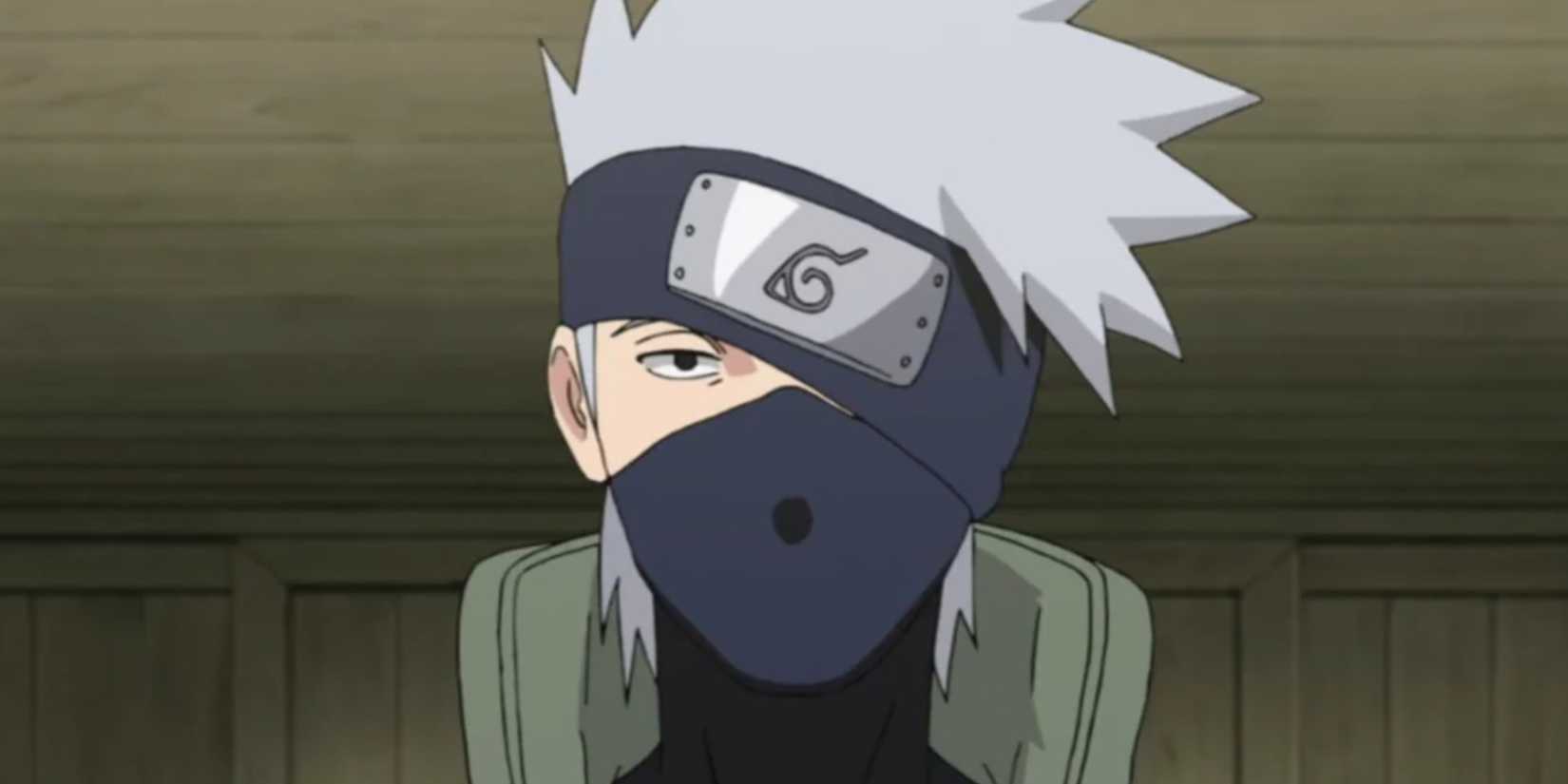
Within the epic tapestry of Naruto Shippuden, a saga defined by escalating power levels and breathtaking displays of ninja prowess, few moments stand as strikingly anomalous, as narratively audacious, and as visually arresting as Kakashi Hatake’s sudden acquisition of the Complete Body Susanoo during the climactic Fourth Great Ninja War. This transformation, a fleeting yet unforgettable surge of power, catapulted Kakashi, the perpetually composed Copy Ninja, into a realm previously reserved for the Uchiha clan’s most prodigal sons, leaving fans both awestruck and pondering the intricate mechanics and narrative implications behind this extraordinary elevation.
Kakashi, a character deeply ingrained in the heart of the *Naruto* narrative, had long been established as a shinobi of exceptional talent, renowned for his strategic brilliance, his mastery of a vast arsenal of jutsu, and, most notably, his Sharingan, a transplanted ocular dojutsu gifted by his fallen comrade, Obito Uchiha. However, even with his formidable skillset, Kakashi remained firmly positioned within the upper echelons of skilled ninja, yet demonstrably below the god-tier power levels attained by figures like Naruto Uzumaki, Sasuke Uchiha, and the legendary Madara Uchiha. Therefore, his sudden manifestation of the Complete Body Susanoo, a power typically requiring the awakening of both Mangekyo Sharingan in both eyes of a Uchiha, presented a significant departure from established canon, demanding a closer examination of the circumstances and justifications underpinning this remarkable, albeit temporary, power surge.
The Crucible of War: Circumstances Leading to Kakashi’s Susanoo
The Fourth Great Ninja War, a cataclysmic conflict threatening to engulf the entire shinobi world, served as the dramatic backdrop for Kakashi’s unexpected transformation. Amidst the chaos of battle, facing overwhelming odds and the resurrected legions of formidable opponents, Kakashi and his comrades found themselves pushed to their absolute limits. It was within this crucible of war, facing the seemingly insurmountable threat posed by Obito Uchiha, now the Ten-Tails’ Jinchuriki and wielding the power of the Sage of Six Paths, that the extraordinary confluence of events leading to Kakashi’s Susanoo manifestation unfolded.
Obito, Kakashi’s former teammate and long-lost friend, had become a central antagonist in the war, his heart consumed by despair and his actions driven by a warped vision of peace. Their confrontation, laden with personal history and fraught with emotional weight, reached a critical juncture as Obito, seemingly impervious to conventional attacks, threatened to overwhelm the Allied Shinobi Forces. It was in this moment of dire need, when hope seemed to dwindle, that the spectral form of Rin Nohara, their deceased teammate and the catalyst for Obito’s descent into darkness, intervened, albeit indirectly, setting the stage for Kakashi’s improbable power-up.
Rin’s spiritual presence, acting as a conduit or catalyst, facilitated a temporary connection between Kakashi and Obito, allowing for a fleeting transfer of chakra and, crucially, the residual power of Obito’s Mangekyo Sharingan. This transfer, while narratively convenient and perhaps bordering on deus ex machina, served as the catalyst for Kakashi’s ascension to Susanoo, granting him access to a power far exceeding his established capabilities. The context of war, the emotional weight of Kakashi and Obito’s shared history, and the intervention of Rin’s spirit, all converged to create the specific, albeit somewhat contrived, circumstances that enabled Kakashi’s temporary godhood.
Unlocking the Susanoo: Mechanics of a Borrowed Power
The mechanics behind Kakashi’s acquisition of the Complete Body Susanoo are inherently linked to the unique nature of his Sharingan and the extraordinary circumstances of the Fourth Great Ninja War. Kakashi, despite not being a biological Uchiha, had wielded Obito’s left Sharingan for years, honing its power and integrating it into his fighting style. This prolonged exposure and deep connection to the Sharingan, coupled with the temporary influx of Obito’s chakra and Mangekyo Sharingan power, created a unique scenario where Kakashi could momentarily access the Uchiha clan’s most potent dojutsu ability.
The Susanoo, in its various stages, is fundamentally a manifestation of the user’s chakra, shaped by the intense emotions and spiritual energy awakened by the Mangekyo Sharingan. Typically, its full manifestation, the Complete Body Susanoo, requires the awakening of Mangekyo Sharingan in both eyes, a feat exclusive to Uchiha clan members. Kakashi, possessing only one Sharingan and not being of Uchiha lineage, should theoretically have been incapable of wielding this power. However, the narrative contrivance of Obito’s temporary spiritual transfer, coupled with the extraordinary circumstances of the war, provided a loophole, a narrative justification for bending the established rules of the *Naruto* universe.
It is crucial to emphasize the temporary nature of Kakashi’s Susanoo. This was not a permanent power-up or a fundamental shift in his character’s capabilities. It was a borrowed power, a fleeting surge granted by extraordinary and arguably contrived circumstances. Once Obito’s spiritual connection was severed, and the temporary chakra transfer ceased, Kakashi’s Susanoo vanished, reverting him to his established power level. This temporary nature, while perhaps mitigating some of the narrative inconsistencies, still left many fans questioning the overall justification and narrative impact of this power surge.
The Azure God of War: Visual Spectacle and Combat Prowess
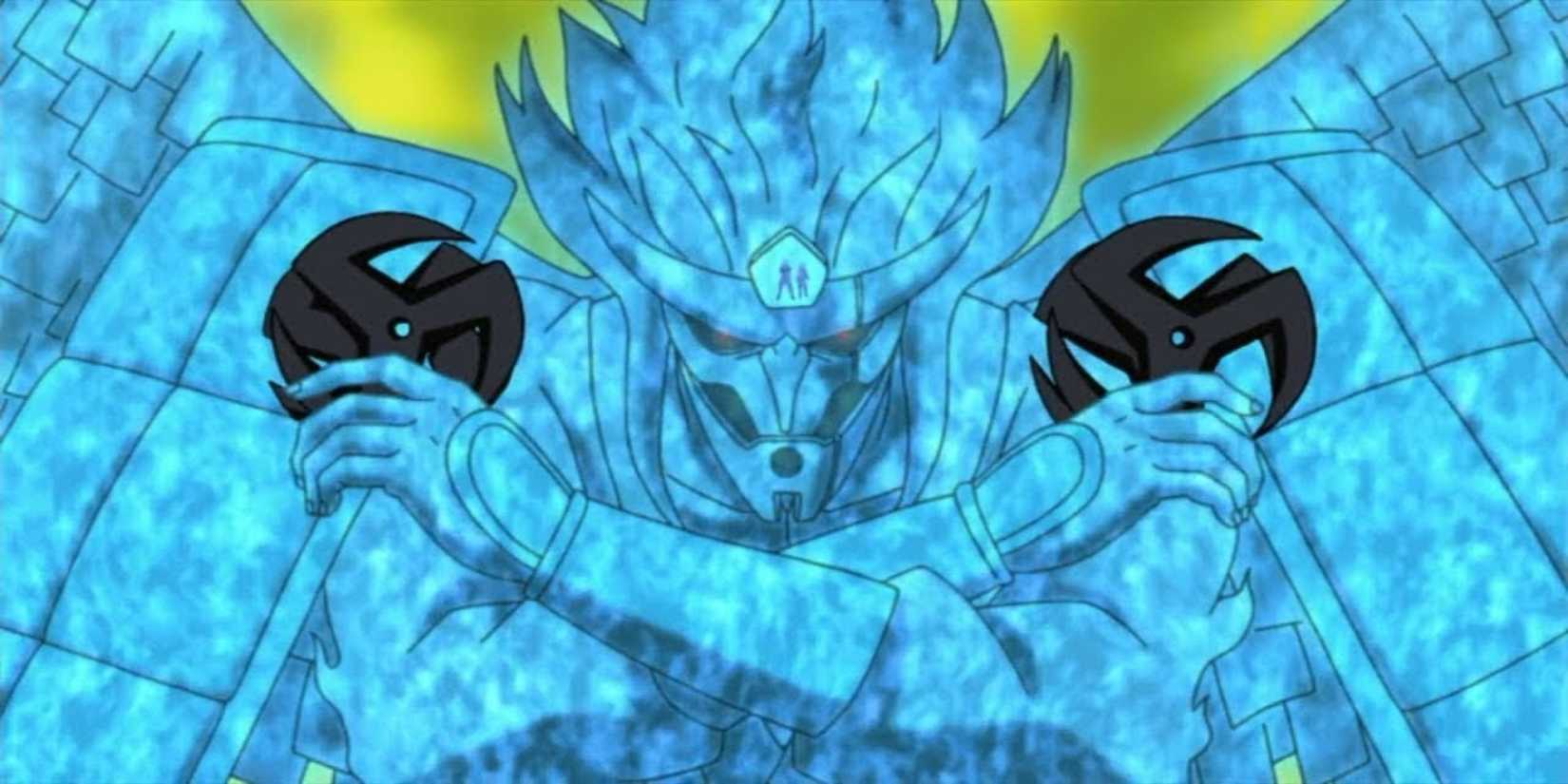
Visually, Kakashi’s Complete Body Susanoo was a breathtaking spectacle, a vibrant azure manifestation that dwarfed even the already colossal forms of Susanoo wielded by Sasuke and Madara. Its design incorporated elements reminiscent of Kakashi’s own aesthetic, with canine features and a sleek, agile silhouette that contrasted with the more imposing and heavily armored Susanoo forms of other Uchiha users. This visual distinction served to emphasize that this was not merely a generic Susanoo but a unique manifestation tailored to Kakashi’s individual chakra signature and fighting style.
In combat, Kakashi’s Susanoo exhibited extraordinary power and versatility. It wielded Kamui Shurikens, projectiles imbued with the Kamui dimension-warping ability, capable of phasing through defenses and instantaneously transporting targets to another dimension. This offensive capability, combined with the Susanoo’s inherent defensive prowess, transformed Kakashi into a veritable god of war, capable of contending with even the most formidable opponents, including Obito in his Ten-Tails Jinchuriki form and Kaguya Otsutsuki, the progenitor of chakra herself.
The sheer scale and destructive potential of Kakashi’s Susanoo during this brief period were undeniable. It allowed him to participate in the final stages of the war on a scale previously unimaginable, contributing significantly to the Allied Shinobi Forces’ efforts against overwhelming odds. However, this power surge, while visually impressive and narratively impactful in the short term, also raised questions about power scaling consistency and the long-term implications for Kakashi’s character arc and overall narrative role.
Narrative Justification vs. Power Creep: Fan Reactions and Critical Discourse
Fan reactions to Kakashi’s Complete Body Susanoo were, and remain, decidedly mixed. While many viewers were undeniably thrilled by the visual spectacle and the sheer coolness factor of Kakashi wielding such immense power, others expressed concerns regarding narrative justification, power creep, and the potential undermining of established canon. The debate surrounding Kakashi’s Susanoo highlights the inherent tension between delivering moments of fan service and maintaining narrative consistency and integrity within a long-running series.
Critics of Kakashi’s Susanoo often point to the perceived contrivance of the power-up, arguing that it felt forced and narratively unearned. The reliance on a temporary chakra transfer and the bending of established rules regarding Susanoo manifestation were seen by some as a convenient plot device to elevate Kakashi’s power level for the sake of spectacle, rather than a natural progression of his character arc or a logically consistent development within the *Naruto* universe. Concerns about power creep also arose, with some fearing that such dramatic power surges, even if temporary, could destabilize the established power dynamics of the series and diminish the impact of future power-ups and transformations.
Conversely, proponents of Kakashi’s Susanoo emphasized the emotional resonance of the moment, the visual spectacle it provided, and its narrative function in elevating Kakashi to a crucial role in the final stages of the war. They argued that the extraordinary circumstances of the war justified bending the rules somewhat, and that the temporary nature of the power-up mitigated concerns about long-term power creep. Furthermore, some fans appreciated the symbolic significance of Kakashi, a character deeply connected to the Uchiha clan through Obito, finally wielding their most iconic power, even if fleetingly.
Lasting Impact and Narrative Legacy: Kakashi’s Moment in the Sun
Despite the mixed fan reception and ongoing debates, Kakashi’s Complete Body Susanoo remains an undeniably memorable and impactful moment within *Naruto Shippuden*. It provided a surge of adrenaline-pumping action, a visually stunning spectacle, and a temporary elevation of Kakashi to god-tier status, fulfilling a desire among many fans to see the Copy Ninja unleash his full potential on the grandest stage of the narrative.
Narratively, Kakashi’s Susanoo served to underscore the extraordinary stakes of the Fourth Great Ninja War and the desperate measures required to confront the overwhelming threats facing the shinobi world. It highlighted the power of bonds and connections, even across life and death, as exemplified by the temporary link between Kakashi and Obito facilitated by Rin’s spirit. It also provided a moment of catharsis for Kakashi’s character, allowing him to transcend his established limitations and contribute to the war effort in a way previously deemed impossible.
While the narrative justification for Kakashi’s Susanoo may remain debatable, its visual impact and short-term narrative function are undeniable. It stands as a testament to the series’ willingness to push boundaries, to deliver moments of unexpected spectacle, and to occasionally bend its own rules in pursuit of dramatic effect. Kakashi’s temporary ascension to Susanoo, though fleeting, cemented his place as a central figure in the Fourth Great Ninja War and provided a moment of unforgettable visual and action-packed brilliance within the sprawling saga of *Naruto Shippuden*. It was, in essence, Kakashi’s moment in the sun, a brief but dazzling display of borrowed godhood amidst the chaos of war.